Vibrating Tables for Gabions
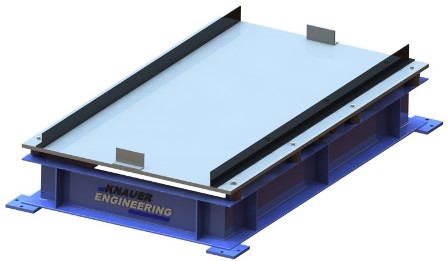
Vibrating table for the manufacturing of Gabionen for Stones
Areas of application
- Construction industry
- Concrete industry
- Mining
- Chemical industry
- Packaging and food industry
- Mechanical engineering
- Inspection and test technology

Contact person
For questions about the product range "Vibrating tables", please contact
Peter Ortmann
08171 - 6295-24
E-Mail
Frequently asked questions about vibrating tables (gabion construction)
Frequently asked questions
What is a vibrating table used for in gabion construction?
Vibrating tables specifically designed for use in gabion construction ensure the automated, reliable compaction of the material within the wire baskets. To achieve this, the stone baskets are first placed on the vibrating table, which then begins to vibrate, causing the small stones to move closer together within the confined space. Such vibrating tables are primarily used where the material (the stones) needs to be compacted as efficiently as possible, such as in large construction projects or as part of an industrial prefabrication process.
What are the technical features of the gabion vibrating table?
From a technical perspective, both the amplitude and frequency of a vibrating table for gabion construction must be taken into account. The amplitude indicates how intensely the table vibrates, whilst the frequency indicates the speed at which it vibrates. A high amplitude is essential for effective compaction. The frequency range is variable, ranging from the low end up to around 25 Hz; if required, operation at 50 Hz is also possible. The recommended frequency for a given process step depends on both the process itself and the stones used. Smaller and finer material reacts more strongly to rapid vibrations, whilst large stones benefit primarily from powerful and slow movements during setting.
In which industries or applications is the gabion vibrating table used?
Wherever gabions and stone baskets need to be manufactured, shaped and compacted as efficiently and automatically as possible. Gabions are used in a variety of sectors, for example in the construction of noise barriers and load-bearing retaining walls, and occasionally in landscaping. A gabion vibrating table could therefore be used in craft workshops or by companies in the construction and landscaping sectors. However, the use of these tables is not limited to these sectors alone. The general principle of operation – compacting previously loose material through continuous shaking, jiggling and vibration – is also beneficial in other processes and across further sectors. Even when, for example, bulk materials sensitive to compaction form part of the production process.
What advantages does the gabion vibrating table offer manufacturers?
The key advantages of a vibrating table for gabion construction relate primarily to the amount of effort required and, consequently, to efficiency. Without a vibrating table, the material would have to be compacted by hand, a time-consuming and laborious process; with a vibrating table, however, this process takes place automatically and with a high degree of consistency. This naturally leads to economic benefits as well, since no staff need be deployed to compact the material manually. Thanks to the continuous and constant vibration in accordance with the set parameters, such a vibrating table also enhances quality and automatically reduces the need for manual reworking and re-sorting that would otherwise be necessary.
Further products
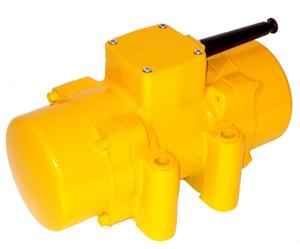
External Vibrator Series R
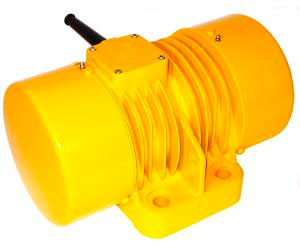
External Vibrator Series V
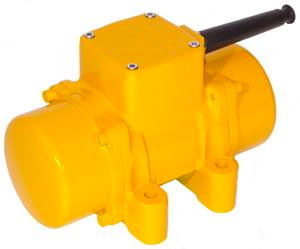
External Vibrator Series R-HF
Special Vibrators
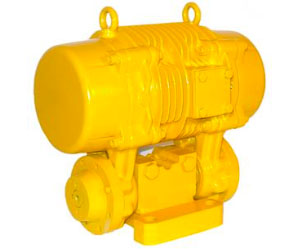
External Vibrator Series A
Vibrating tables
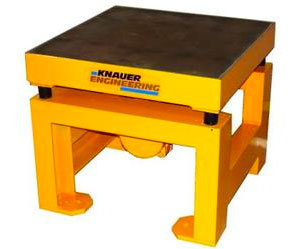
Vibrating Tables Standard
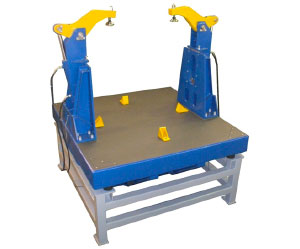
Custom-built Vibrating Tables
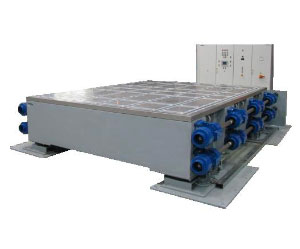
Vibrating Tables for Mineral Cast
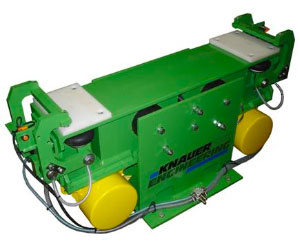
Vibration Stands
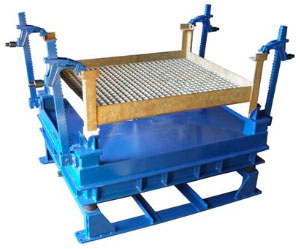
Vibrating Sieves
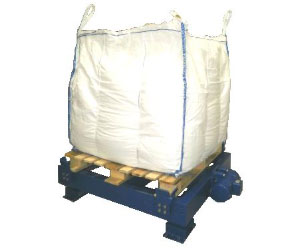
Big Bag Compacter